
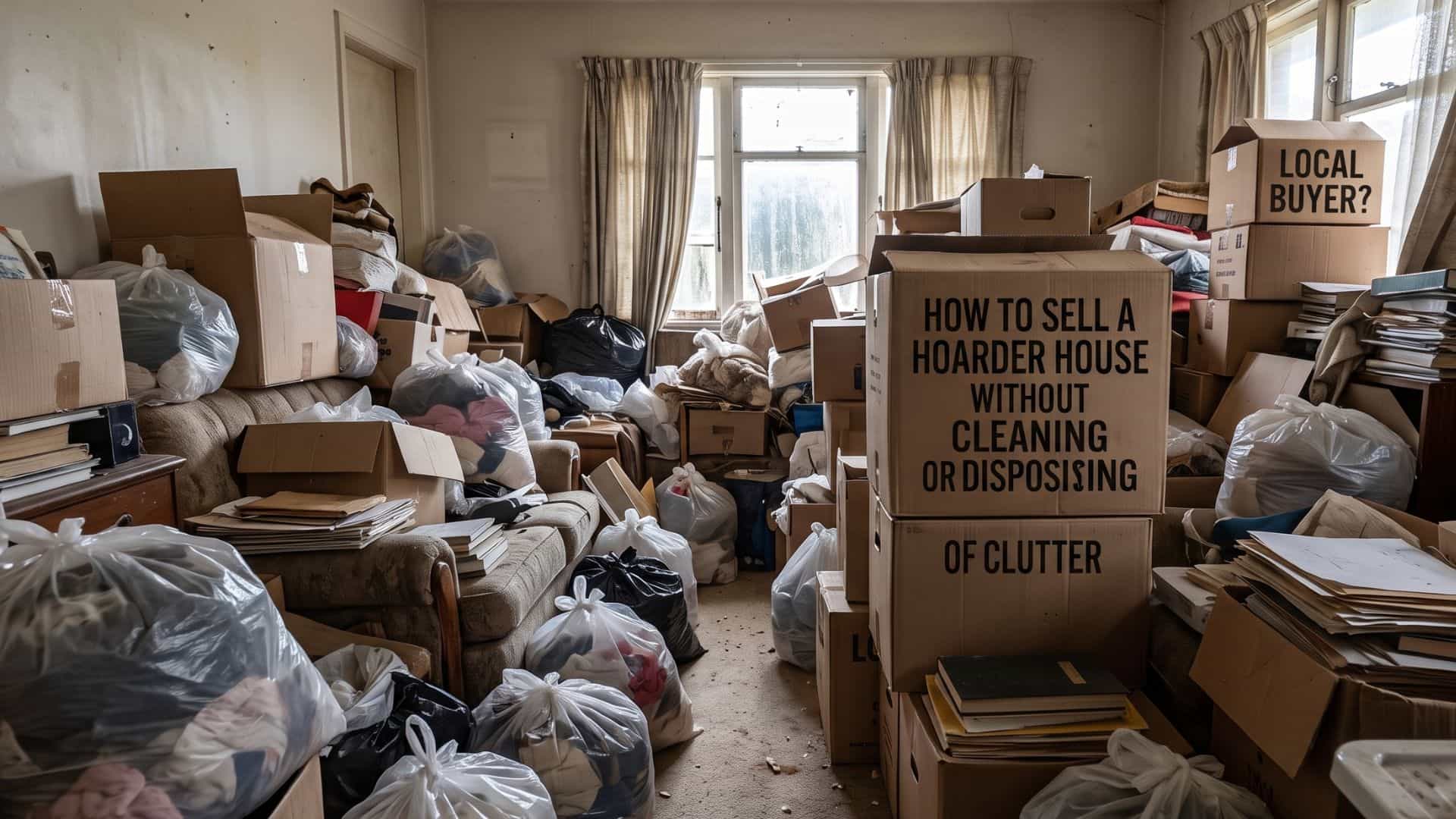
Yes, you can sell a hoarder house without cleaning, removing belongings, or making any repairs. Specialized off market cash buyers and real estate investors purchase these properties in as is condition, factoring cleanup costs into their offer rather than passing that burden to the seller.
The trade off is a below market purchase price, calculated using the property’s post renovation value minus estimated repair and remediation costs. For homeowners facing an overwhelming accumulation of belongings, this approach eliminates cleanup expenses that can easily reach $10,000 to $45,000 or more, provides a faster closing timeline (often 7 to 21 days), and removes the psychological and physical burden of managing a full estate cleanout.
What is a hoarder house and why traditional agents avoid them
A hoarder house is any property where the accumulation of belongings has reached a level that impairs normal use of the home and creates identifiable hazards or habitability concerns.
On the other end, you have properties with animal hoarding histories, biological contamination, structural damage caused by weight load, or active pest infestations embedded within years of accumulated material.
Traditional listing agents avoid these properties for one very practical reason: most buyers can’t finance them.
That immediately eliminates the vast majority of buyers from your pool. According to demographic research from the National Association of Realtors, 46% of retail buyers say they’re unwilling to consider a property requiring major repairs even when they have financing. Factor in that first time buyers hit a historic low of 21% of the market in 2025 and median home prices have reached $429,300, and it becomes clear: the typical retail buyer is already stretched thin. They are not taking on a hoarder property
The true cost of professional biohazard and hoarding cleanup
Before you agree to clean out a hoarder property, you need to understand what you’re actually committing to. This is not a weekend project. It is not a matter of renting a few dumpsters.
Standard estate and clutter removal costs
For homes with heavy but non hazardous accumulation furniture, clothing, paper goods, general household items the baseline cost of professional junk removal and cleanout services runs:
- Small to medium cleanout (1–3 rooms): $500 to $2,500
- Whole house cleanout (moderate accumulation): $2,500 to $7,500
- Severe whole house cleanout (floor to ceiling, multiple rooms): $7,500 to $20,000+
These figures assume the material is standard household waste. The moment you introduce biological contamination, the cost model changes dramatically.
Biohazard remediation: Where costs escalate
Homes with animal hoarding histories particularly cats, dogs, or rodents almost always require biohazard remediation. Urine and fecal contamination saturates flooring, subfloor, drywall, and insulation. Standard cleanout crews are not equipped or licensed to handle it.
Certified biohazard remediation costs in 2026 typically run:
- Urine and fecal contamination (single room): $2,000 to $6,000
- Whole house animal waste remediation: $10,000 to $30,000+
- Subfloor and drywall replacement due to saturation: $5,000 to $25,000 additional
- Air quality testing and post remediation certification: $500 to $2,500
The HUD Healthy Homes Program identifies biological contaminants from animal waste as a Category 1 health hazard, and remediation must meet specific standards before the property can be considered habitable. This isn’t optional if you’re selling through traditional channels.
Mold: The hidden cost multiplier
Clutter impairs ventilation. Years of stacked belongings against walls, blocked windows, and minimal airflow create ideal conditions for mold growth often invisible until professional testing reveals extensive colonization behind walls, under flooring, and in attic spaces.
Mold remediation costs add another layer:
- Localized surface mold (one area): $500 to $3,000
- Moderate mold remediation (multiple rooms): $3,500 to $10,000
- Severe structural mold (full remediation required): $15,000 to $30,000+
The Environmental Protection Agency’s residential waste and mold guidance is clear that visible mold exceeding 10 square feet requires professional remediation, not DIY treatment. Attempting to mask mold with paint or sealant and disclosing it inadequately creates significant legal liability for sellers.
The full cleanup bill: A realistic estimate
For a genuine hoarder property with mixed conditions heavy clutter, some animal history, and moderate mold a realistic total cleanup budget before you can even think about listing traditionally looks like this:
| Cleanup Category | Low Estimate | High Estimate |
|---|---|---|
| Whole house junk removal & haul away | $5,000 | $15,000 |
| Biohazard remediation (animal waste) | $8,000 | $25,000 |
| Mold testing and remediation | $3,500 | $15,000 |
| Subfloor/drywall replacement | $4,000 | $20,000 |
| Deep cleaning and deodorization | $1,000 | $4,000 |
| Dumpster rentals (multiple loads) | $800 | $3,500 |
| Total Estimated Cleanup Cost | $22,300 | $82,500 |
That’s money spent before a single repair is made, before staging, before photography, and before you pay an agent’s commission.
How to sell a house full of junk without cleaning a single room
The alternative is straightforward, even if it feels counterintuitive at first: sell the property in its current condition to a cash buyer who specializes in distressed and hoarder homes.
This is the practical application of selling your property in its current condition a transaction model designed specifically to remove repair and remediation burdens from the seller entirely.
What as is means for a hoarder property
When a cash buyer purchases a hoarder home as is, they are explicitly agreeing to take possession of the property in whatever state it currently exists belongings, waste, structural issues, and all. The purchase contract documents this clearly. You are not liable for the cleanup after closing.
You take what you want. You leave what you don’t. That’s the operating principle. Family heirlooms, documents, valuables, sentimental items those come with you. The broken recliner, the 40 years of magazines, the non functional appliances those stay.
What you don’t have to do
To be concrete about what the as is cash sale removes from your plate:
- No sorting, bagging, or removing any belongings
- No hiring junk removal companies
- No scheduling dumpsters
- No professional cleaning of any kind
- No mold testing or remediation before closing
- No pest inspections or treatments as a precondition
- No repairs to flooring, walls, or structural elements
- No staging or photography preparation
- No open houses or showings to the general public
How specialized off market companies value a hoarding property
Cash buyers don’t use emotion or aesthetics to price a hoarder house. They use a structured financial model based on one core calculation.
The after repair value (ARV) framework
Every legitimate cash buyer starts with the After Repair Value (ARV) the estimated market price of the property once all remediation, cleanup, and renovation work is complete and the home is brought to a sellable condition.
ARV is calculated through comparable sales analysis: recent transactions of similar homes in the same neighborhood, adjusted for size, condition, and features. This is the same methodology licensed appraisers use.
The 70% rule: How the offer Is built
Once ARV is established, investors apply what’s known as the 70% rule to calculate their Maximum Allowable Offer (MAO):
MAO = (ARV × 0.70) − Total Estimated Costs
The 30% margin retained from ARV isn’t profit it’s a structured reserve that covers:
- Hard money or bridge loan financing costs: 8.5% to 12% interest rates on capital borrowed to fund acquisition and renovation, plus origination fees of 1.5% to 3%
- Holding costs: Property taxes, insurance on a vacant property, and utilities during the renovation period
- Transaction costs on both ends: Title transfer fees, escrow, and the 5% to 6% agent commission when the renovated home is sold at retail
- Risk premium: A 10% to 15% buffer against cost overruns, timeline delays, or market softening during the hold period
For a hoarder property, cleanup and remediation costs are included in the «Total Estimated Costs» variable the same bucket as foundation repairs, roof replacement, or electrical upgrades.
A practical example
Consider a hoarder property in a neighborhood where comparable renovated homes sell for $280,000:
| Variable | Amount |
|---|---|
| After Repair Value (ARV) | $280,000 |
| Estimated remediation & cleanup | $35,000 |
| Estimated structural repairs | $25,000 |
| Cosmetic renovation budget | $18,000 |
| Total Estimated Costs | $78,000 |
| ARV × 70% | $196,000 |
| Maximum Allowable Offer (MAO) | $118,000 |
In this scenario, a legitimate cash buyer would offer in the range of $115,000 to $120,000. The seller walks away with no cleanup bills, no agent commissions, and no months of a vacant property draining them in taxes and insurance.
What drives offers down and what doesn’t
Factors that reduce a cash offer on a hoarder property:
- Animal waste contamination requiring full subfloor replacement
- Active mold with confirmed structural penetration
- Foundation issues compounding the remediation scope
- Properties in markets with limited comparable sales data
Factors that don’t reduce offers as much as sellers fear:
- General clutter and belongings (buyers price this in as standard)
- Cosmetic damage from stacking or storage
- Outdated systems or fixtures (already in the renovation scope)
- Unpleasant odors (addressed through professional deodorization)
The clutter itself is almost never the primary pricing driver. Structural and biological conditions underneath it are.
Traditional cleanup sale vs Cash as is sale
| Factor | Traditional Sale (After Cleanup) | Cash As Is Sale (No Cleanup) |
|---|---|---|
| Pre-sale cleanup cost | $22,000–$82,500 out of pocket | $0 |
| Time to close | 90–180+ days | 7–21 days |
| Agent commission | 5%–6% of sale price | None |
| Buyer financing contingencies | Yes frequent deal collapses | None cash, no contingencies |
| Property condition requirements | Must pass appraisal/inspection | No minimum condition requirement |
| Belongings removal obligation | Seller’s full responsibility | Seller takes only what they want |
| Sale price | Closer to full market value (post cleanup) | Below market (ARV discount applied) |
| Ideal for | Properties with mild clutter, seller has capital | Severe hoarding, no cleanup budget, urgent timeline |
Step by step: The «Take What You Want, Leave the Rest» Cash Sale
Understanding the process removes the uncertainty. Here’s what a cash sale of a hoarder property looks like from first contact to closing day.
Step 1: Initial contact and property information
You reach out to a cash buyer either directly through their website, by phone, or through a platform that connects sellers with off-market real estate marketplaces. You provide basic property information: address, approximate square footage, your general sense of the condition.
No photos required at this stage. No inspection. No commitment.
Step 2: Preliminary offer within 24–48 hours
Most reputable cash buyers provide a preliminary offer range within one to two business days, based on public records data and neighborhood comps. This is not the final number, but it tells you whether the conversation is worth continuing.
Red flag: Any buyer who pressures you to sign anything at this stage before seeing the property.
Step 3: Walkthrough (on your schedule)
A buyer representative schedules a walkthrough at your convenience. This is typically a 30–60 minute visit. They’re looking at structural condition, identifying potential biological or mold issues, and assessing the scope of cleanup needed.
You do not need to clean, organize, or stage anything before this visit. They are explicitly there to see the property as it actually exists.
Step 4: Formal written offer
Within 24 hours of the walkthrough, you receive a formal written offer. This document specifies:
- The purchase price
- Who pays closing costs (legitimate buyers typically cover all of them)
- The proposed closing timeline
- The as is nature of the purchase, explicitly documented
- Any conditions (legitimate buyers will have very few usually only a title search)
Step 5: You decide what to take
Once you accept the offer, you have the period between signing and closing to retrieve personal belongings, documents, valuables, or sentimental items. Anything you don’t remove stays with the property and transfers to the buyer at closing.
There is no judgment. There is no checklist of what you must remove. You take what matters and leave what doesn’t.
Step 6: Closing
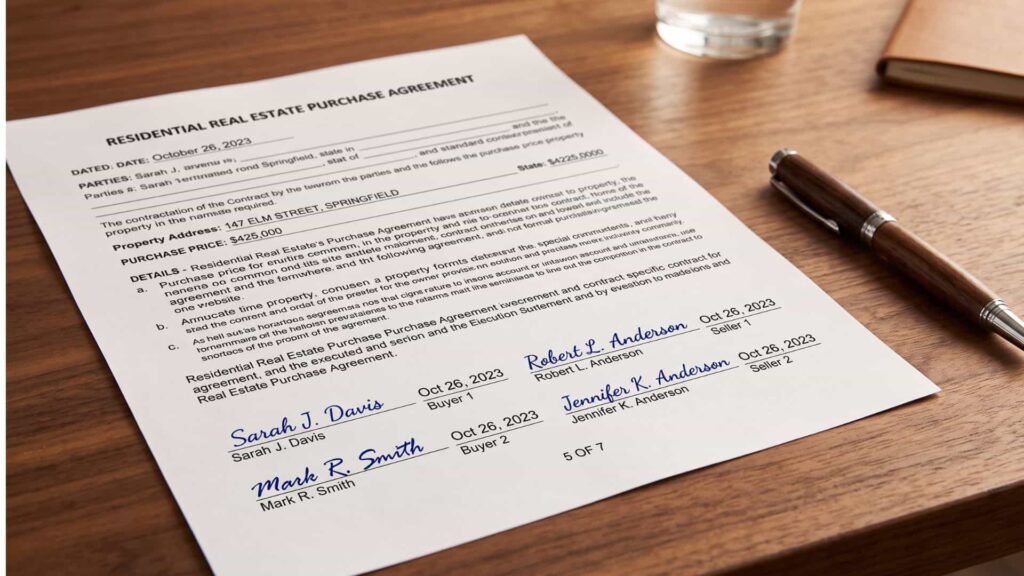
Closing on a cash sale typically takes 7 to 21 days from the signed purchase agreement. No lender approval, no appraisal contingency, no waiting for mortgage underwriting. You sign the deed transfer, and funds are wired directly to your account.
Finding legitimate companies that buy hoarder houses
Not every «we buy houses» sign on a telephone pole represents a trustworthy buyer. The hoarder property niche attracts a minority of predatory investors who use the condition of the home as leverage to renegotiate aggressively at closing a practice known as «price chopping.»
What to look for
- Verifiable local or national track record: Look for documented transaction history, not just testimonials on their own website
- Clear written offer with no hidden fee structures: The net cash you receive at closing should match what was offered, with no surprise deductions
- No earnest money required from the seller: Legitimate cash buyers put skin in the game; they don’t ask you to prove commitment
- No pressure on timeline: A trustworthy buyer gives you adequate time to retrieve belongings and review the contract
- Transparent process from offer to closing: They should be able to explain every step clearly without deflecting
A well researched HomeVestors review can give you a detailed look at how one of the largest national franchise networks for distressed property purchases operates including their approach to hoarder and severely distressed homes so you know what to expect from that category of buyer.
Getting multiple offers
Always request offers from at least three to five buyers before making a decision. The difference between the highest and lowest offer on a hoarder property can be $15,000 to $40,000 not because buyers are necessarily acting dishonestly, but because they have different cost models, financing rates, and renovation networks.
The best offer isn’t always the highest number on paper. Evaluate:
- Net cash after any deductions
- Who covers closing costs
- Closing timeline flexibility
- Reputation and verified transaction history
- Contract terms around backing out or price adjustments
A note on inherited hoarder properties
A significant portion of hoarder house sales involve estates adult children managing a deceased parent’s property, often from out of state, often with no understanding of what’s inside and no capacity to conduct a full cleanout.
If you’re managing an inherited hoarder property, the most important first step is to do nothing irreversible don’t throw away documents, financial records, or items that could have legal significance before you’ve done at least a cursory walkthrough with someone who can identify potential valuables or important paperwork buried in the accumulation.
FAQs to how to sell a hoarder house
Can I sell a hoarder house if there’s an active pest infestation?
Yes. Cash buyers routinely acquire properties with rodent, cockroach, or insect infestations. This will be factored into the remediation cost estimate and reflected in the offer price, but it does not disqualify you from the process.
Do I need to disclose the hoarding history to a cash buyer?
Yes, full disclosure is both legally required and practically wise. Cash buyers purchasing as is see the condition themselves and price accordingly. Attempting to conceal known issues creates legal liability that follows you after the sale.
What if the home has structural damage caused by the weight of accumulated belongings?
Structural damage is assessed during the buyer’s walkthrough and factored into their cost estimate. It affects offer price but does not typically prevent the sale from proceeding.
How quickly can I close?
Most cash sales of hoarder properties close in 7 to 21 days from the signed purchase agreement. Some buyers offer 7 day closings for sellers in urgent situations, such as pending foreclosure.
Is there any scenario where I should clean before selling to a cash buyer?
Generally no, the cash buyer’s renovation team is equipped to handle the cleanup professionally and at lower cost than you could hire individually. Spending money on cleanup before a cash sale rarely increases the offer proportionally. The exception might be if you’re selling to an end buyer through an off market marketplace rather than a direct investor in that case, limited cleanup might improve your negotiating position.