
The off-market real estate landscape can unfortunately attract predatory investors and deceptive mortgage relief schemes. We expose the most common industry red flags—from last-minute bait-and-switch price drops to illegal wholesaling traps—so you can protect your equity and transfer your title securely.
Common cash buyer scams and red flags
Most cash buyers are legitimate, but the market also attracts bad actors who rely on urgency and confusion. These are the patterns we see most often:
- Proof of funds that never arrives. A real buyer can show a verifiable letter from a bank or title company. See how to spot cash home buyer scams.
- The late price cut. A strong offer that drops sharply near closing. Read how the bait-and-switch works.
- Assignment clauses. A "buyer" who is really a wholesaler may assign your contract to someone else, often for a fee you never see.
- Pressure and upfront fees. Artificial deadlines, or any request that you pay money before closing, are warning signs.
- Unfamiliar title or escrow companies. Choose your own title company or attorney whenever you can.
How to verify a buyer before you sign
- Ask who will actually buy the house and who will provide the funds.
- Request proof of funds and confirm it directly with the issuing bank or title company.
- Check the business with your state’s Secretary of State and review complaints with the Better Business Bureau and your state attorney general.
- Read the contract for assignment, inspection and cancellation clauses, and have an attorney review it.
- Compare at least two or three offers by net proceeds, not headline price.
If you think you have been targeted
Report it to the Federal Trade Commission, your state attorney general and local law enforcement. If money was wired, contact your bank immediately and file a report with the FBI Internet Crime Complaint Center. Our guides below explain each scam in detail.
General information only, not legal or financial advice. Rules vary by state, so consult a licensed attorney before signing a contract. See our editorial policy.
-
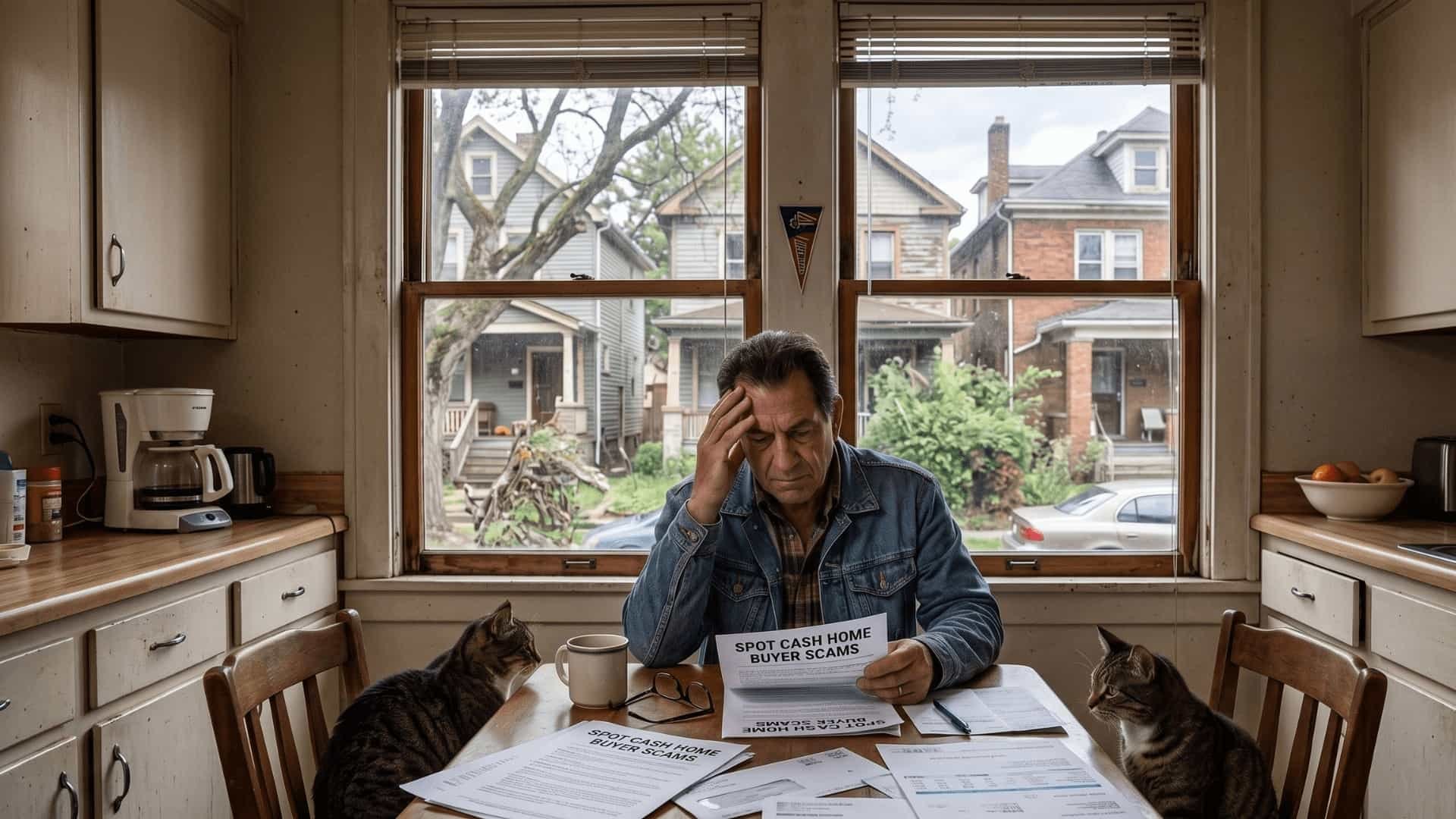 Scams & Red Flags
How to spot cash home buyer scams
Protecting yourself means verifying the buyer’s legal standing, demanding a bank-authenticated proof of funds, and always closing through an independent, state-licensed title and escrow company Carlos García TorrenteNovember 2, 2026
-
 Scams & Red Flags
The cash buyer bait-and-switch scam: How pre-escrow price drops work
The cash buyer bait-and-switch is a scheme in which a speculative operator makes an inflated cash offer to tie up your property, then demands a
Carlos García TorrenteNovember 2, 2026